BPC-157 vs. TB-500: How the Two Peptides in Klow80 Differ
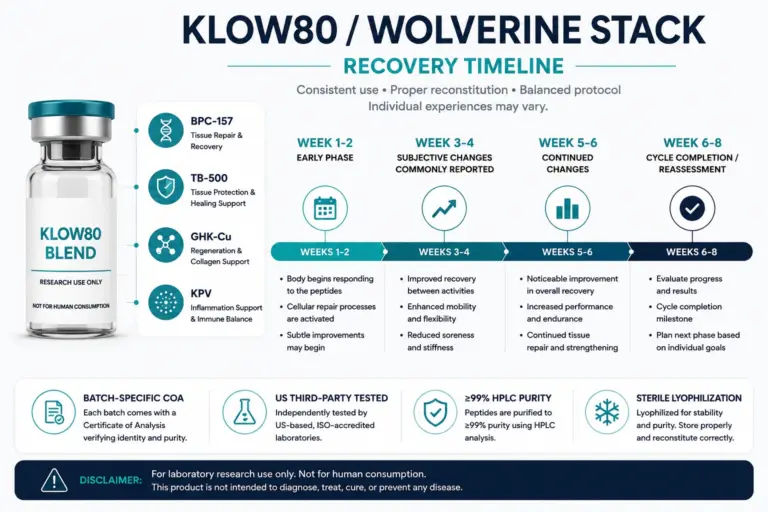
Klow80 Blend combines BPC-157 and TB-500 alongside GHK-Cu and KPV, but the two headline peptides are structurally distinct compounds studied for different mechanisms. Here’s what separates them.
Different origins, different structures
BPC-157 is a synthetic pentadecapeptide — a 15-amino-acid fragment derived from a protective protein identified in human gastric juice. TB-500 is a synthetic version of a fragment of Thymosin Beta-4, a naturally occurring 43-amino-acid protein involved in actin regulation and cell migration. They are not variants of the same molecule; they come from entirely different parent proteins, which is the starting point for why researchers studying them typically frame them as complementary rather than interchangeable.
What each is studied for
Preclinical literature on BPC-157 has focused heavily on gastrointestinal protection and localized tissue models — the compound was first isolated in that gastric-protective context, and much of the published animal research follows that thread, alongside broader tissue-repair research applications.
TB-500 research centers on actin-binding activity — the mechanism by which Thymosin Beta-4 fragments influence cell migration and cytoskeletal dynamics in tissue models. That’s a distinct mode of action from BPC-157’s mechanism, which is part of why the two are frequently studied together in combination-research contexts rather than as substitutes for each other.
Why they’re combined in research settings
Because BPC-157 and TB-500 act through different pathways, researchers modeling tissue-repair processes often study them in combination to observe whether the two mechanisms produce additive or synergistic effects in a given model — distinct from studying either compound in isolation. Klow80 Blend was formulated around that same logic, pairing BPC-157 and TB-500 with GHK-Cu and KPV. Our cost and convenience comparison covers the practical tradeoffs of a pre-blended research compound versus sourcing each peptide individually.
Purity and sourcing matter more than the individual-vs-blend question
Whichever combination a study protocol calls for, the peptides used need to be verifiable. Molecular weight, sequence identity, and purity should be confirmed by third-party HPLC testing rather than taken on a vendor’s word — our storage and handling guide covers what a legitimate certificate of analysis should include and how to read one.
Research use only
BPC-157 and TB-500 are not FDA-approved therapeutics, and neither this article nor the compounds it describes are intended for human or veterinary use. This is mechanism-level research background, not a usage protocol.
Sourcing both peptides pre-verified
If a study design calls for both mechanisms in one preparation, the batch-tested Klow80 Blend comes with a certificate of analysis included per batch.
Related guides
- Where to Buy Klow80 Blend: Buyer’s Guide
- Klow80 Blend vs. Buying Separately
- Full Blend Dosage Guide
- Storage, Handling & FAQ
- GHK-Cu Research Applications
For laboratory and in vitro research use only. Not for human or veterinary use. Not an FDA-approved product.