BPC-157 + TB-500 + GHK-Cu + KPV Blend Dosage Guide for Research Use
BPC-157 + TB-500 + GHK-Cu + KPV Blend: Dosage Reference for Research Use
A breakdown of how the four components in Klow80 Blend are handled in published research protocols — reconstitution, concentration math, and per-component reference ranges cited in the literature. For laboratory research use only.
Why this is framed as a research reference, not instructions
None of the four peptides in this blend — BPC-157, TB-500, GHK-Cu, or KPV — are FDA-approved for any use, and there is no officially sanctioned dosing schedule for any of them. What follows summarizes ranges reported in published in vitro and animal research and commonly cited in the peptide research community, strictly for laboratory reference. This is not a protocol for human or animal administration.
Reconstitution basics
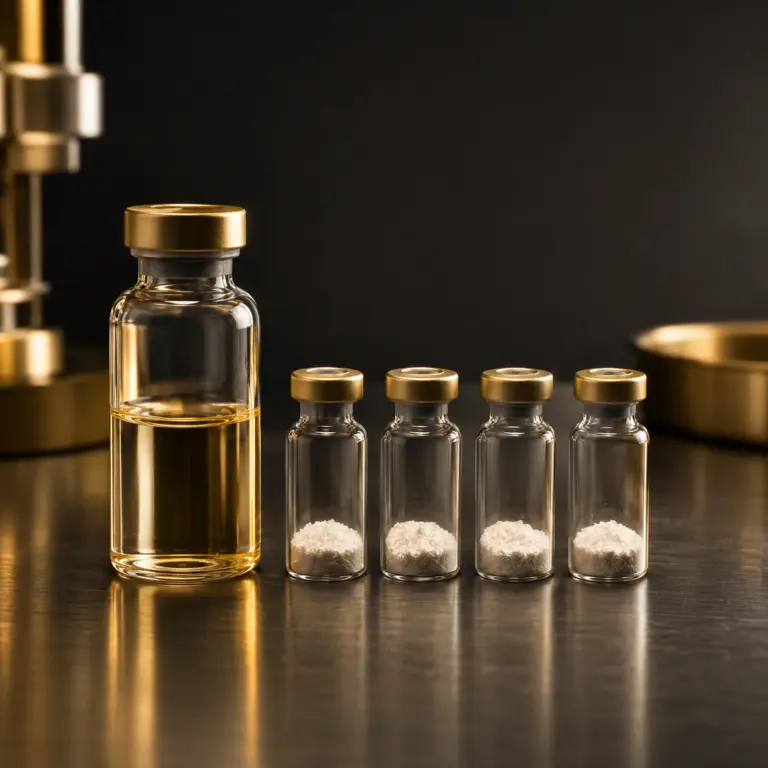
Klow80 Blend ships lyophilized (freeze-dried) at 80mg total peptide content per vial. Standard laboratory practice for lyophilized peptides is to reconstitute with bacteriostatic water, added slowly down the side of the vial rather than injected directly onto the powder, then gently swirled — never shaken — to avoid denaturing the peptide structure. Reconstituted solution should be stored at 2–8°C and used within 28 days.
Concentration math for a 4-component blend
Because Klow80 Blend combines four peptides in one vial rather than four separate vials, calculating an equivalent per-component concentration requires knowing the blend’s exact composition ratio (available on the product’s Certificate of Analysis) rather than assuming an even 20mg-per-component split. Researchers accustomed to single-peptide vials should request or review the CoA’s stated ratio before drawing any comparison to individual-peptide literature doses. For the full worked formula and a step-by-step example, see our BPC-157 + TB-500 dosage calculator & concentration math guide.
Reference ranges cited in the literature, by component
- BPC-157 — animal-model studies most commonly reference doses in the low-microgram-per-kilogram range, dosed frequently (often daily) in the source literature.
- TB-500 — research literature and community-reported protocols reference a loading phase followed by a lower-frequency maintenance phase, with total weekly reference amounts varying significantly by study design.
- GHK-Cu — most published research on GHK-Cu concentration comes from topical/dermal application studies rather than systemic administration, so its dosing literature is not directly comparable to the other three components.
- KPV — referenced in inflammatory-response models at low microgram-range concentrations in the studies that have evaluated it.
These figures vary meaningfully between sources, are not standardized, and should not be treated as a recommendation. Anyone reviewing this blend for a research application should independently verify concentration data against primary literature and their own protocol requirements.
Storage and handling checklist
- Store lyophilized peptide at −20°C until reconstitution.
- After reconstitution with bacteriostatic water, store at 2–8°C.
- Use reconstituted solution within 28 days.
- Avoid repeated freeze-thaw cycles, which degrade peptide structure.
- Keep vials away from direct light.
See our full storage and handling FAQ for more detail.
Where to source Klow80 Blend
Klow80 Blend is HPLC-verified to ≥99% purity, with a Certificate of Analysis for every batch stating the exact four-peptide composition referenced above. Available through our verified store partner, Peptryn.
Related guides
- BPC-157 + TB-500 Dosage Calculator: Concentration Math
- BPC-157 + TB-500 Recovery Timeline: What the Community Reports
- Where to Buy Klow80 Blend: Buyer’s Guide
- TB-500 Peptide: Benefits, Dosage & Research Overview
- KPV Peptide: Benefits, Dosage & What Research Shows
- GHK-Cu Copper Peptide: Research Applications
- Klow80 Blend Storage, Handling & FAQ