KPV vs. BPC-157: How the Two Peptides in Klow80 Differ
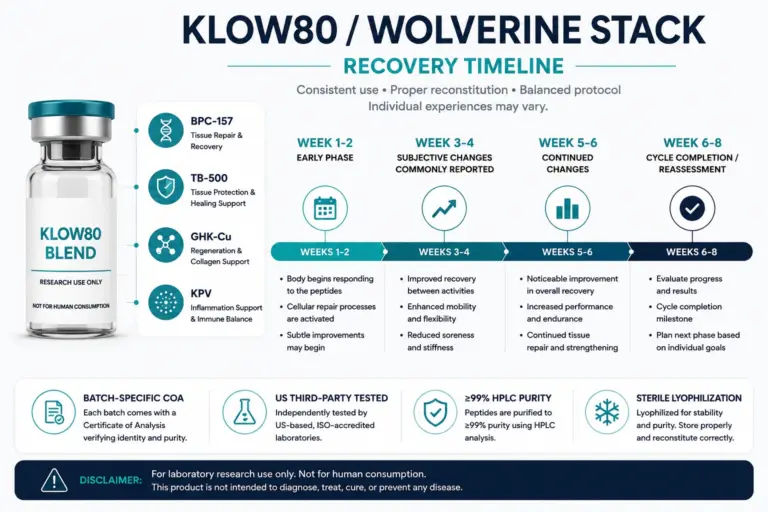
Klow80 Blend pairs KPV with BPC-157, TB-500, and GHK-Cu, but KPV and BPC-157 are structurally distinct compounds studied through different inflammatory and repair pathways. Here’s what separates them.
Different structures, different origins
KPV is a tripeptide — just three amino acids (lysine-proline-valine) — corresponding to the C-terminal fragment of alpha-MSH (alpha-melanocyte-stimulating hormone), a naturally occurring signaling peptide. BPC-157 is a much larger synthetic pentadecapeptide, a 15-amino-acid fragment derived from a protective protein identified in human gastric juice. They aren’t variants of the same molecule or interchangeable forms of one compound — they come from entirely different parent proteins and different structural classes.
What each is studied for mechanistically
Published research models KPV’s proposed mechanism around the melanocortin signaling axis: it’s reported to enter cells via the PepT1 (SLC15A1) peptide transporter and downregulate NF-κB, a protein complex central to inflammation-driving gene expression — a relatively targeted, localized anti-inflammatory pathway.
BPC-157’s proposed mechanism in research models is broader and multi-axis: interaction with growth-factor and angiogenic pathways, including VEGF and nitric oxide signaling, underpins its wider tissue-repair research profile. It doesn’t act through one well-characterized receptor the way KPV’s transporter-mediated pathway is described — its research footprint spans more systems.
Why they’re combined in Klow80 Blend
Because KPV’s proposed mechanism is comparatively targeted and BPC-157’s is comparatively broad, researchers modeling inflammation-and-repair processes together often study the two in combination to see whether the pairing produces complementary effects that neither compound shows in isolation — the same logic behind pairing BPC-157 with TB-500 in the same blend. Klow80 Blend was formulated around that combined-pathway approach across all four peptides.
Purity and sourcing matter more than the individual-vs-blend question
Whichever combination a study protocol calls for, the peptides used need to be verifiable. Molecular weight, sequence identity, and purity should be confirmed by third-party HPLC testing rather than taken on a vendor’s word — our storage and handling guide covers what a legitimate certificate of analysis should include and how to read one.
Research use only
KPV and BPC-157 are not FDA-approved therapeutics, and neither this article nor the compounds it describes are intended for human or veterinary use. This is mechanism-level research background, not a usage protocol.
Sourcing both peptides pre-verified
If a study design calls for both mechanisms in one preparation, the batch-tested Klow80 Blend comes with a certificate of analysis included per batch.
Related guides
- Where to Buy Klow80 Blend: Buyer’s Guide
- BPC-157 vs. TB-500: How They Differ
- KPV Peptide: Benefits, Dosage & What Research Shows
- Full Blend Dosage Guide
- Storage, Handling & FAQ
For laboratory and in vitro research use only. Not for human or veterinary use. Not an FDA-approved product.