Klow80 Blend vs. Buying BPC-157, TB-500, GHK-Cu & KPV Separately: Cost, Purity & Convenience Compared
Klow80 Blend vs. Buying BPC-157, TB-500, GHK-Cu & KPV Separately
A factual look at what actually changes — cost, testing overhead, and dosing convenience — when four peptides are sourced as one verified blend instead of four separate vials. For research use only.
Why Researchers Ask This
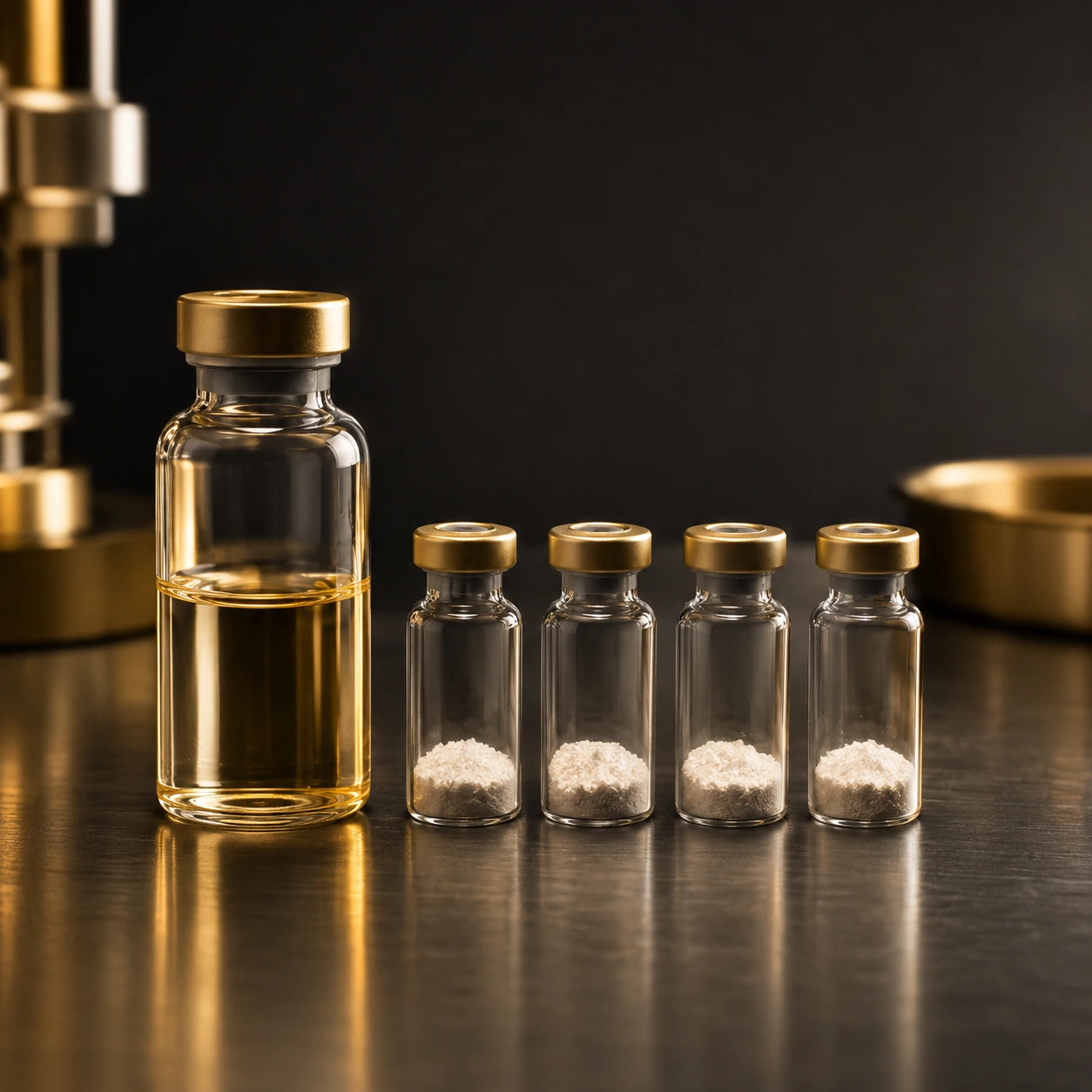
Anyone already familiar with BPC-157 and TB-500 individually (the “Wolverine Stack” combination) eventually runs into Klow80 Blend and asks a reasonable question: is a pre-mixed four-peptide vial actually better than sourcing each component separately, or is it just a markup on convenience? The honest answer is that it depends on what’s actually being compared — and most comparisons people make informally skip a real cost, which is testing.
What Actually Changes: Testing Overhead
Every batch-specific Certificate of Analysis costs money to produce — independent third-party HPLC testing per lot isn’t free, and a supplier running it honestly builds that cost into pricing. Buying four separate peptides from four separately-tested batches means paying that testing overhead four times over, once per vial. A single pre-blended, single-batch-tested vial covering all four components means that overhead is paid once, not four times, which is the actual mechanical reason a verified blend can come out cost-competitive with (or cheaper than) sourcing the same four components individually with equivalent testing rigor on each.
The catch: that math only holds if the blend is genuinely tested to the same standard as four individually-tested vials would be. An untested or thinly-tested blend is not a fair comparison to four properly-tested individual vials — it’s just a different, worse trade. Always check whether a blend’s CoA covers all four components individually or just asserts a combined purity number.
Composition Control: Where Separate Vials Win
Buying each peptide separately gives full control over the ratio and timing of each component — a researcher can run BPC-157 and TB-500 on one protocol and adjust GHK-Cu or KPV independently, or skip a component entirely. A pre-blended vial locks in whatever ratio the manufacturer set (see our storage & FAQ page for how Klow80’s composition is documented on its CoA). For a research protocol that specifically needs independent control over each peptide’s dose or schedule, separate vials are the more flexible choice, full stop — a blend is a convenience trade-off, not a strictly “better” option in every case.
Dosing Convenience: Where the Blend Wins
The practical case for a blend is fewer vials to reconstitute, label, store, and track concentration math for. Instead of four separate reconstitution calculations and four vials taking up refrigerator space with four separate expiration clocks running, there’s one. For a straightforward tissue-repair-and-recovery research protocol that doesn’t need independently adjustable ratios, that’s a real, non-trivial reduction in operational overhead — see our dosage guide for what that reconstitution math actually looks like for the blend.
Side-by-Side Summary
| Klow80 Blend (pre-mixed) | Four Separate Vials | |
|---|---|---|
| Testing overhead | Paid once, across all four components | Paid four times, once per vial, if each is properly tested |
| Composition control | Fixed ratio, set by the blend’s CoA | Fully independent — adjust or omit any component |
| Reconstitution & storage | One vial, one concentration to track | Four vials, four separate calculations and expiration clocks |
| Best fit | Standard tissue-repair/recovery protocol using all four as-is | A protocol that specifically needs independently adjustable dosing per peptide |
What to Check Before Choosing Either Path
Regardless of which approach fits a given research protocol, the same verification standard applies: a named third-party lab, a batch-specific CoA (not a generic one reused across batches), and HPLC purity results for every component actually present in the vial — not just an aggregate purity claim. See our buyer’s guide for the full vendor-evaluation checklist that applies whether sourcing a blend or individual peptides.
FAQ
Is Klow80 Blend cheaper than buying BPC-157, TB-500, GHK-Cu, and KPV separately? It can be, because a single batch-tested vial spreads the cost of independent lab testing across all four components instead of paying that overhead four separate times — but only if the blend is tested to the same rigor as four individually-verified vials would be.
Can I adjust the ratio of peptides in a blend? No — a pre-mixed vial has a fixed composition set by the manufacturer and documented on its Certificate of Analysis. If a research protocol needs independently adjustable ratios or the ability to omit a component, separate vials are the better fit.
Does a blend sacrifice purity compared to individual vials? Not inherently — purity depends entirely on whether the blend is independently tested to the same standard as separately-sourced vials would be, not on whether it’s blended. Always check the CoA covers each component individually.
Which peptides are in Klow80 Blend? BPC-157, TB-500, GHK-Cu, and KPV, HPLC-verified to 99%+ purity per batch. See the COA library for current batch results.
The Honest Take
Neither approach is universally better — a blend trades composition flexibility for lower testing overhead and simpler logistics, and separate vials trade that convenience for full independent control. The decision comes down to whether a research protocol needs to adjust each peptide independently, or is running all four as a standard combination anyway. What doesn’t change regardless of which path is chosen: verify the actual testing rigor behind whatever is being sourced, rather than assuming a blend is either automatically cheaper or automatically lower quality.
See current Klow80 Blend batches and CoA
Related guides
- Where to Buy Klow80 Blend: Buyer’s Guide
- BPC-157 + TB-500 + GHK-Cu + KPV Blend Dosage Guide
- Wolverine Stack: Recovery Timeline & What the Community Reports
- TB-500 Peptide: Benefits, Dosage & Research Overview
- KPV Peptide: Benefits, Dosage & What Research Shows
- GHK-Cu Copper Peptide: Research Applications
- Storage, Handling & FAQ
Research-Use Disclaimer
This article is for research and informational purposes only. BPC-157, TB-500, GHK-Cu, and KPV are not FDA-approved and are sold strictly for laboratory research use, not for human consumption, self-administration, or veterinary use. Nothing here constitutes medical advice or a purchasing recommendation. Consult a licensed physician before making any decisions related to your health.